Introduction: Rising Interest in Mohali Real Estate Investment
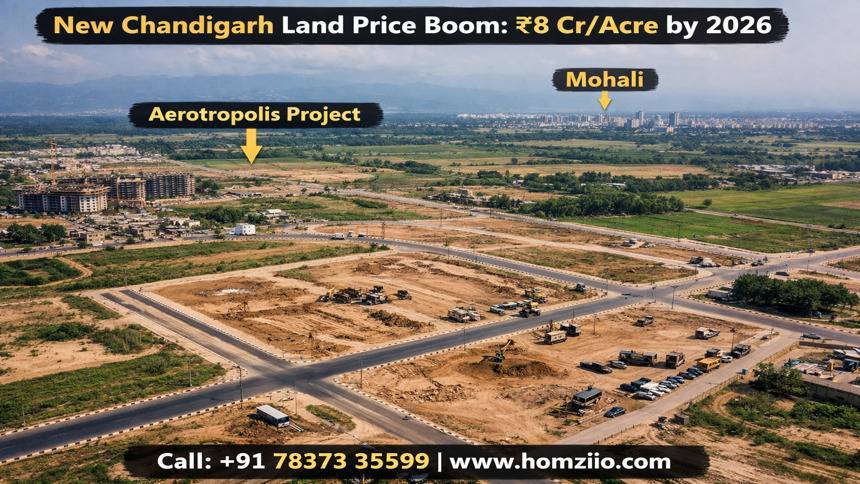
The recent land acquisition initiative by GMADA has significantly boosted attention toward property investment in Mohali, particularly among investors seeking high-growth opportunities in the Tricity region. This large-scale move goes beyond a policy decision - it reflects upcoming infrastructure development, commercial growth, and increasing demand in the real estate market.
From an investor’s perspective, such government-backed developments often indicate the start of a new growth cycle. Insights from homziio.com highlight that locations supported by planned land acquisition typically attract early investors, followed by noticeable price appreciation over time.
Understanding GMADA Land Acquisition and Its Importance
Key Highlights of the Acquisition
GMADA has acquired approximately 502 acres of land across strategically located villages in Mohali. The focus is on developing commercial sectors and expanding industrial zones.
Purpose Behind the Move
Creation of commercial hubs
Strengthening industrial infrastructure
Planned urban expansion
This development strengthens Mohali’s position as a growing economic and real estate center in Punjab.
Impact on Mohali Property Investment
Growing Demand for Real Estate
Commercial growth leads to:
Increased employment opportunities
Influx of working professionals
Higher demand for housing
Potential for Price Growth
As per Knight Frank India (2024), real estate markets driven by infrastructure in Tier-2 cities can experience 12–18% appreciation within 3–5 years.
Local Market Perspective
According to experts at homziio.com, investing early in emerging areas often delivers better returns compared to already developed locations.
Emerging Investment Opportunities in Mohali
Residential Segment
Rising demand for apartments and gated societies
Strong rental yield potential
Commercial Segment
Retail outlets
Office spaces
Warehousing developments
Advantage of Early Investment
Investors entering the market at an early stage benefit from:
Lower entry prices
Higher long-term returns
Investment Scenario: Before vs After GMADA Acquisition
| Factor | Before Acquisition | After Acquisition |
|---|---|---|
| Demand | Moderate | Rapidly Increasing |
| Prices | Stable | Upward Trend |
| Investor Interest | Limited | High |
| Growth Potential | Gradual | Strong |
Risks to Consider Before Investing
Possible Challenges
Delays in project execution
Market speculation
Policy or regulatory changes
Risk Mitigation Tips
Choose verified and trusted projects
Focus on long-term investment goals
Seek guidance from experienced local advisors like homziio.com
Is Mohali a Good Investment After GMADA Development?
Yes, infrastructure-driven expansion remains one of the strongest drivers of property value growth. With GMADA’s development plans, Mohali presents solid long-term potential for both residential and commercial investments.
Real-World Comparison
Cities like Gurgaon have witnessed similar growth patterns, where infrastructure expansion and land acquisition resulted in over 40% price appreciation between 2015 and 2020.
Mohali is now entering a comparable growth phase, making it a promising destination for investors.
Smart Investor Checklist
Identify projects close to development zones
Verify the developer’s track record
Invest early in high-growth corridors
Monitor infrastructure progress
Diversify between residential and commercial assets
Conclusion: Strong Indicator of Future Growth
The GMADA land acquisition clearly signals a new phase of development for Mohali. For investors, this is an ideal time to explore opportunities before property prices reach their peak.
According to homziio.com, early investments in government-backed development areas generally offer better returns with relatively lower risk compared to late-stage entry.
Get Expert Guidance
If you are planning to invest in Mohali or the Tricity region, professional guidance can help you make smarter decisions.
📞 Phone: +91 78373 35599
Connect for personalized property consultation, verified listings and strategic investment planning.